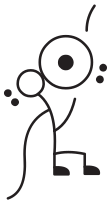
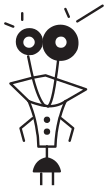
multiglyph [ˌmʌltɪˈglɪf]
About Multiglyphs
An abstract character, often stylised and simplified, which may hold numerous and potentially unlimited meanings. The interpretations of a multiglyph can vary widely and, in some instances, may even embody opposing ideas.
What the test measures
Creativity is usually described by two traits: originality (how new an outcome is) and value (how useful or relevant it is). Psychometric tests, like those of Guilford, Torrance, Wallach and Kogan, measure it with indicators such as originality, fluency (how many responses), flexibility (how varied they are) and elaboration (how much detail).
Multiglyphs uses the psychometric approach. You come up with as many interpretations of a glyph as you can, and your creativity is measured by how many you find and by the associations that inspired them. Research suggests that with consistent practice we can hone our creative abilities, so play more than one test.
How scoring works
- As the book counts it: every idea is a point and every association behind it is a point. Five glyphs make a test; your total is read on the book’s scale (below 20, 20 to 40, above 40).
- On the leaderboard: only ideas and associations that hold up count. An AI judge sets aside gibberish, filler words, the same idea twice and associations that don’t link the glyph to the idea. It is generous with far-fetched but genuine ideas.
- Originality bonus: +1 for an idea fewer than 5% of earlier players saw in that glyph, once at least 20 people have played it.
- Your answers are stored with your nickname only, to show others what people saw in each glyph and to judge originality. No account, no email.
Tips from the book
- Try new things: see how the place, the people around you or your mood change what you see. Try a test outside, or on your way to work.
- Enjoy yourself: play with friends and compare what you saw.
- Go narrower: seasoned players can limit themselves, for example to the person’s occupation. The narrower the guess, the more creativity it takes.

Stavros Stavru, PhD
Stavros drew the multiglyphs and wrote the five books, which grew out of an exhibition about how differently we see the world. Seeing many meanings in one thing is a blessing, he writes, and seeking the hidden meanings in what we observe can make us more tolerant of each other. His other work explores the same idea at work.
The five books
Each book has ten tests of five multiglyphs, with space to write your answers and score them, the scale and the reading list. Five books, 250 glyphs.
See the series on Amazon ↗Selected reading from the books: Sawyer, Explaining Creativity (2012); Runco and Pritzker, Encyclopedia of Creativity (2011); Kaufman and Sternberg, The Cambridge Handbook of Creativity (2010); Kaufman, Plucker and Baer, Essentials of Creativity Assessment (2008); Csikszentmihalyi, Creativity (2009).